
Ghost Spotting and Other Petal Blights
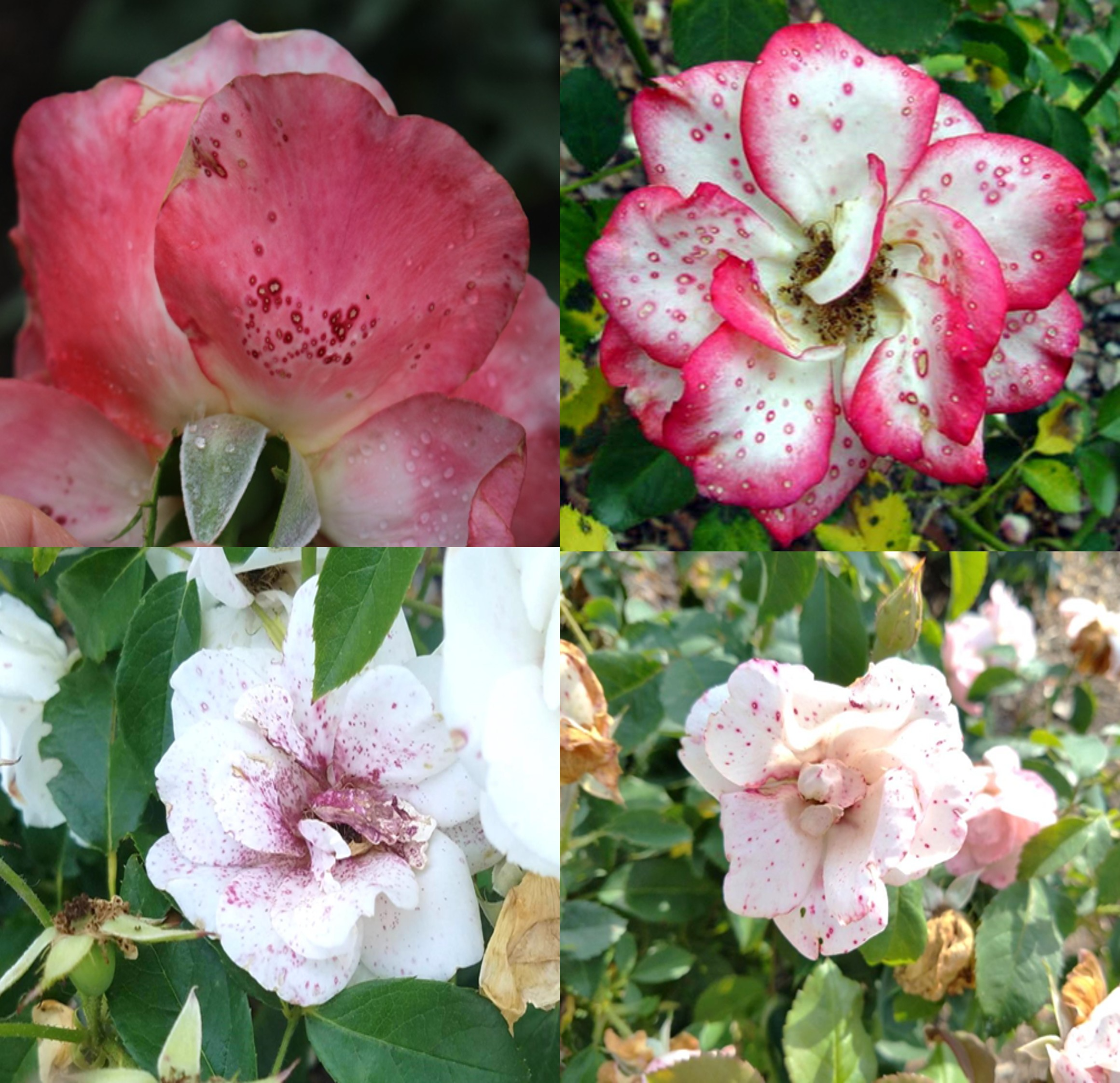
It’s the beginning of October and our thoughts turn to preparation for Halloween with spooks, ghosts, and other types of specters – “oooooo”. Seriously, we are going to discuss a fungi that cause small, but numerous lesions of petals. Most publications refer to this disease as petal blight and that was the term I used for almost ten years. However, many of my students could not remember that term on exams. It was baffling. I changed the name to ghost spotting and bingo; retention went up over 80%. I have been using the term ghost spotting ever since.
What causes ghost spotting? Ghost spotting is the response to infection by several fungi including species of Bipolaris, Botrytis, Cercospora, and Cladosporium. Most people think only Botrytis is involved and it often is involved. However, Botrytis may be coming in as a secondary invader after another fungus has caused the initial infection. Symptoms include small white, pink, red, and/or brown spots with many of the spots having pink to red borders. The variation may be due to the initial fungus causing the infection or due to the cultivar of rose impacted by the disease. The spots can be very small, but numerous and can enlarge to almost a 1/8 inch in diameter. If the environment is conducive for disease development, the spots can coalesce and cause petal blights.
Ghost spotting may be severe during prolonged periods of rain. Control is difficult and usually limited to dead heading affected blooms. Many years ago in Knoxville, TN, a rose show was held shortly after several weeks of rainy weather. Many of the roses on display were heavily damaged with ghost spots on the petals. One entrant won practically every award because he had protected his buds and developing flowers by placing umbrellas made of Kentucky Fried Chicken baskets attached to tomato stakes over his blooms to protect them from the rain (and thus ghost spotting). Protectant fungicides are of little use due to the rain washing off the fungicide. Systemic fungicides are also ineffective as little fungicide accumulates in the petals due to petals having poorly developed vascular systems.
Mark Windham was a distinguished professor of ornamental pathology at the University of Tennessee, Knoxville. After retirement, Mark and his wife Karen love to walk beaches, visit with old rose friends, and enjoy grandchildren.