
Management of Rose Rosette Disease
That Rose Bush is Not Your Grandchild - Mark Windham
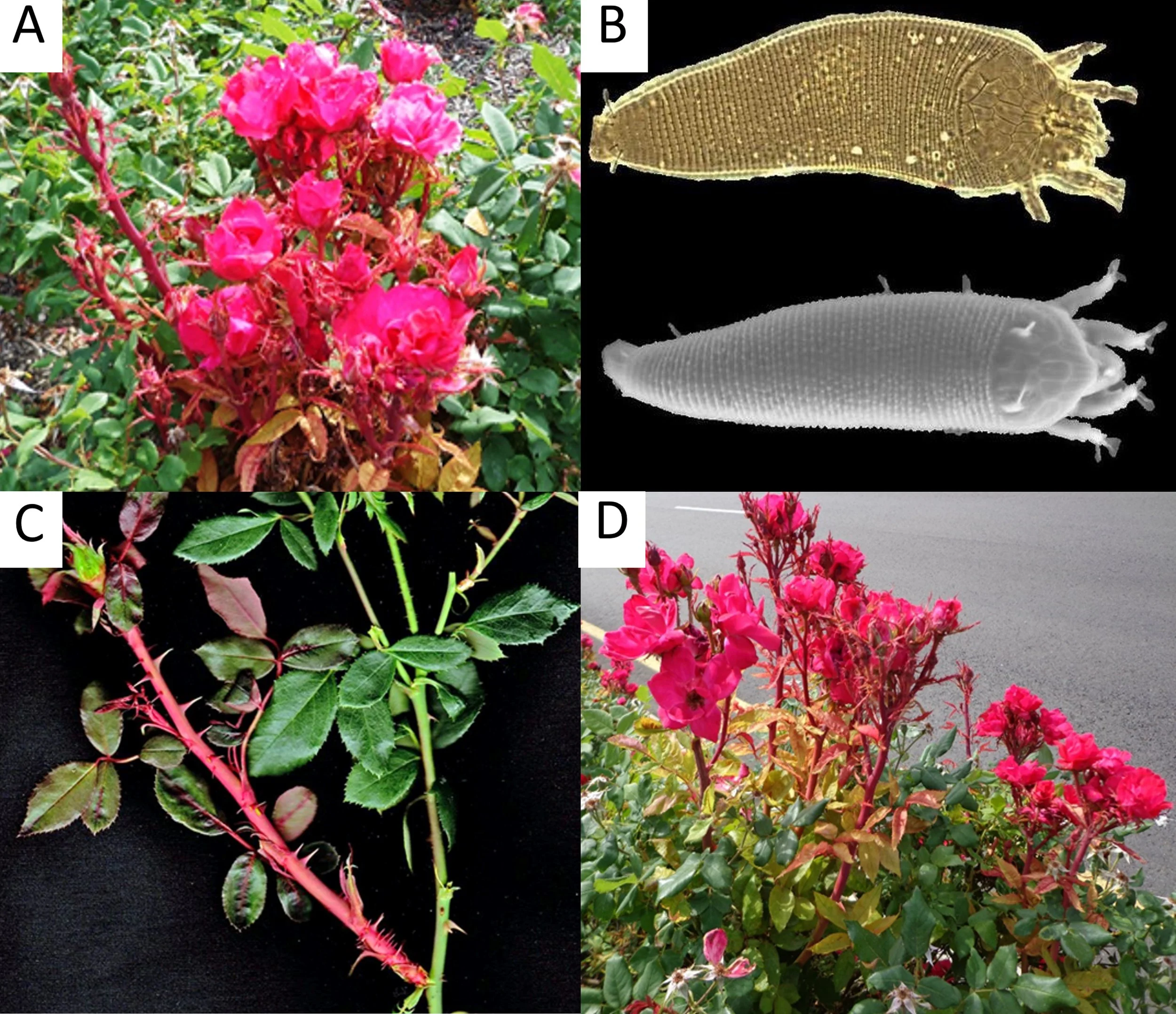
Rose Rosette Disease, RRD, (Fig. A) is caused by the virus, Rose Rosette Virus (RRV). The virus is spread by an eriophyid mite (Fig. B). The mite is blind (no eyes) and flightless (no wings), however it can float in the air like dust particles. This may sound inefficient, but the virus is spread efficiently from one rose to another. Mite populations may be 40-70 times higher on symptomatic roses than on healthy ones which leads to likely virus movement to nearby roses. Though some areas of the country are not seriously impacted by RRD, the virus and mites can be moved anywhere in the country on infected, asymptomatic plants.
Know what early symptoms of RRD look like. One or more shoots, usually not low ones like basal breaks, may be red, have thickened stems and unusually more or enlarged thorns (prickles). Leaflets are unusually thin (Fig. C). Do not wait for rosettes to form (Fig. D). Inspect roses for RRD at least monthly. If multiple symptoms are found, REMOVE THE BUSH! It is better to protect your garden by removing a prize-winning bush that you mistakenly thought had RRD than to be slow to remove a RRV infected rose in your garden. A rose is just a bush (I know blasphemy), not a grandchild – cull it! Due to the potential devastation RRD can cause, be hard hearted and remove bushes suspected of being infected with RRV. Before composting, cut the removed bush in pieces, tie up in a black plastic bag and bake in the sun for several days. If you want to use a miticide to protect roses, the only miticide labeled for homeowners that is known to reduce eriophyid mite populations is bifenthrin. If you decide to use miticides, begin spraying two weeks after first bloom flush. Spray on three-week intervals till killing frost. Resistance is known, but not currently available.
Storm clouds on the horizon. Due to shifting national priorities, USDA NIFA has announced that they are no longer accepting applications for research proposals for the indefinite future. Development of desirable roses will with RRD resistance will likely be slowed. If you want to financially support the continued development of RRD resistant roses please contact Dr. Nar Ranabhat, (615-835-4572 / nranabha@tennessee.edu) or Mr. Marshall Willett (865-974-6376 / mwillett@utfi.org) for ways that you can become a team member in supporting this research.
Mark Windham was a distinguished professor of ornamental pathology at the University of Tennessee, Knoxville. After retirement, Mark and his wife Karen love to walk beaches, visit with old rose friends, and enjoy grandchildren.